
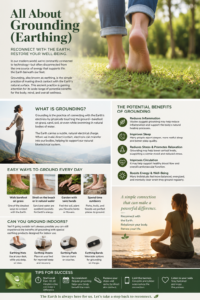
In today’s technology-driven world, many of us spend most of our time indoors, wearing rubber-soled shoes and surrounded by electronic devices. Grounding, also known as earthing, is a wellness practice that encourages reconnecting with the Earth’s natural surface by making direct skin contact with grass, soil, sand, or natural bodies of water.
Many people who practice grounding say it helps them feel calmer, more relaxed, and more connected to nature. While scientific research into grounding is still evolving, interest in this natural wellness practice continues to grow.
Grounding is the practice of allowing your body to come into direct contact with the Earth’s surface. This can be as simple as:
The idea behind grounding is that reconnecting with nature may support overall well-being while encouraging you to slow down, relax, and spend more time outdoors.
Although more high-quality research is needed to fully understand the effects of grounding, some preliminary studies and personal experiences suggest it may offer several potential benefits.
Spending time outdoors is already known to support mental well-being. Many people report feeling calmer and more relaxed after grounding, especially when practiced in peaceful natural settings.
Some individuals who practice grounding regularly report sleeping more soundly and waking feeling more refreshed. Good sleep is an essential part of maintaining overall health.
Grounding naturally slows you down. Feeling the grass beneath your feet or listening to the sounds of nature encourages you to become more present and mindful.
Walking barefoot in a safe outdoor area encourages light movement, helping you stay active while enjoying fresh air and sunshine.
Grounding is often practiced alongside other healthy lifestyle habits such as regular exercise, nutritious eating, stress management, and quality sleep. Together, these habits can contribute to a balanced wellness routine.
You don’t need any special equipment to begin grounding outdoors.
Spend 10 to 20 minutes walking on:
Always check the area first for sharp objects or hazards.
Working with plants and soil is another enjoyable way to connect with nature while getting gentle exercise.
Walking barefoot on the sand while listening to the waves can be both relaxing and refreshing.
If walking isn’t possible, simply sit outdoors with your bare feet resting on the grass while reading, meditating, or enjoying a quiet moment.
For people who cannot spend much time outdoors, products such as grounding mats, grounding sheets, or grounding bands are available. These products are designed to simulate certain aspects of grounding when used according to the manufacturer’s instructions.
While many users report positive experiences, research on indoor grounding products is still developing, and results may vary from person to person.
Grounding is generally a simple wellness practice, but it’s important to stay safe.
Grounding has gained popularity because it is simple, inexpensive, and encourages spending more time in nature. Some early research has explored possible effects on sleep, stress, and well-being, but more large, well-designed studies are needed before firm conclusions can be drawn about specific health benefits.
Rather than viewing grounding as a treatment for medical conditions, consider it one part of a healthy lifestyle that also includes regular physical activity, balanced nutrition, adequate sleep, stress management, and routine medical care.
Grounding (earthing) is a simple practice that encourages reconnecting with nature by making direct contact with the Earth’s surface. Whether you walk barefoot across a grassy lawn, relax on a sandy beach, or spend time tending a garden, grounding offers an opportunity to slow down, breathe deeply, and enjoy the outdoors.
Combined with healthy eating, regular exercise, quality sleep, and mindful living, grounding can become a meaningful part of your overall wellness journey. Sometimes the simplest habits—like stepping outside and connecting with nature—can remind us to care for both our bodies and our minds.
